Great to see you here! Please register and create your new account.





Produkte wurde erfolgreich in den Warenkorb gelegt
Your Basket
Pieces
Order for an additionaland you will receive your order with free shipping.
Subtotal
Loading...
Checkout using your account
Checkout as a new customer
Creating an account has many benefits:
- See order and shipping status
- Track order history
- Check out faster
RoHS
Environmental management / RoHS
OTTO SCHOCH AG is committed to keeping its products compliant with the RoHS Directive and therefore refrains from using environmentally harmful substances such as lead, mercury, cadmium, chromium VI and plastics such as polybromide biphenyl (PBB) and polybromide diphenyl ether (PBDE).
According to Appendix III of the RoHS Directive, there are the exemptions 6b ‘lead as an alloying element in aluminium with a maximum mass fraction of 0.4% lead’ and 6c ‘copper alloys with a mass fraction of up to 4% lead’.
Otto Schoch AG is in close contact with its suppliers to ensure that its products continue to meet all the necessary requirements in the future.
The basic of RoHS
The abbreviation RoHS (Restriction of the use of certain hazardous substances in electrical and electronic equipment) refers to the EC Directive 2002/95/EC on the prohibition of certain substances in the manufacture and processing of electrical and electronic equipment and components, and its implementation in national law.
The aim is to ban extremely problematic components from products in the course of the massive expansion of disposable electronics. This includes, among other things, enforcing lead-free soldering of electronic components, banning toxic flame retardants in the production of cables and strengthening the introduction of corresponding substitute products. Furthermore, the parts and components used must themselves be free of such substances.
This has a direct impact on the companies involved, such as importers, individual companies (including small hardware companies) or shops and retail chains, and consequently ultimately also on the consumer.
Common toxic substances in electronics are considered highly hazardous to the environment. Some of them escape from landfills into nature, are poorly degradable and therefore accumulate in the natural cycle. These substances are to be banned from products by RoHS. The following are affected
1. lead
2. mercury
3. cadmium
4. hexavalent chromium
5. polybrominated biphenyls (PBB)
6. polybrominated diphenyl ethers (PBDE)
According to the original directive, these substances were in principle not allowed to be contained in products. Since this requirement would not have been feasible in terms of production technology and could also not have been analytically detected, concrete limit values for the homogeneous materials contained in the product were defined in an amendment to the directive of 18 August 2005:
* a maximum of 0.01 percent by weight of cadmium
* a maximum of 0.1 percent by weight each of lead, mercury, hexavalent chromium, PBB and PBDE.
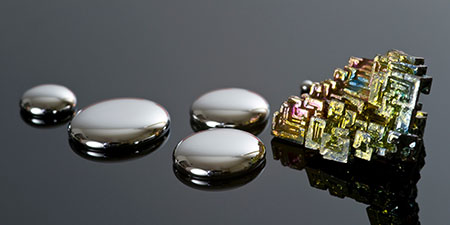
 Restriction of Hazardous Substances Directive
Loading...